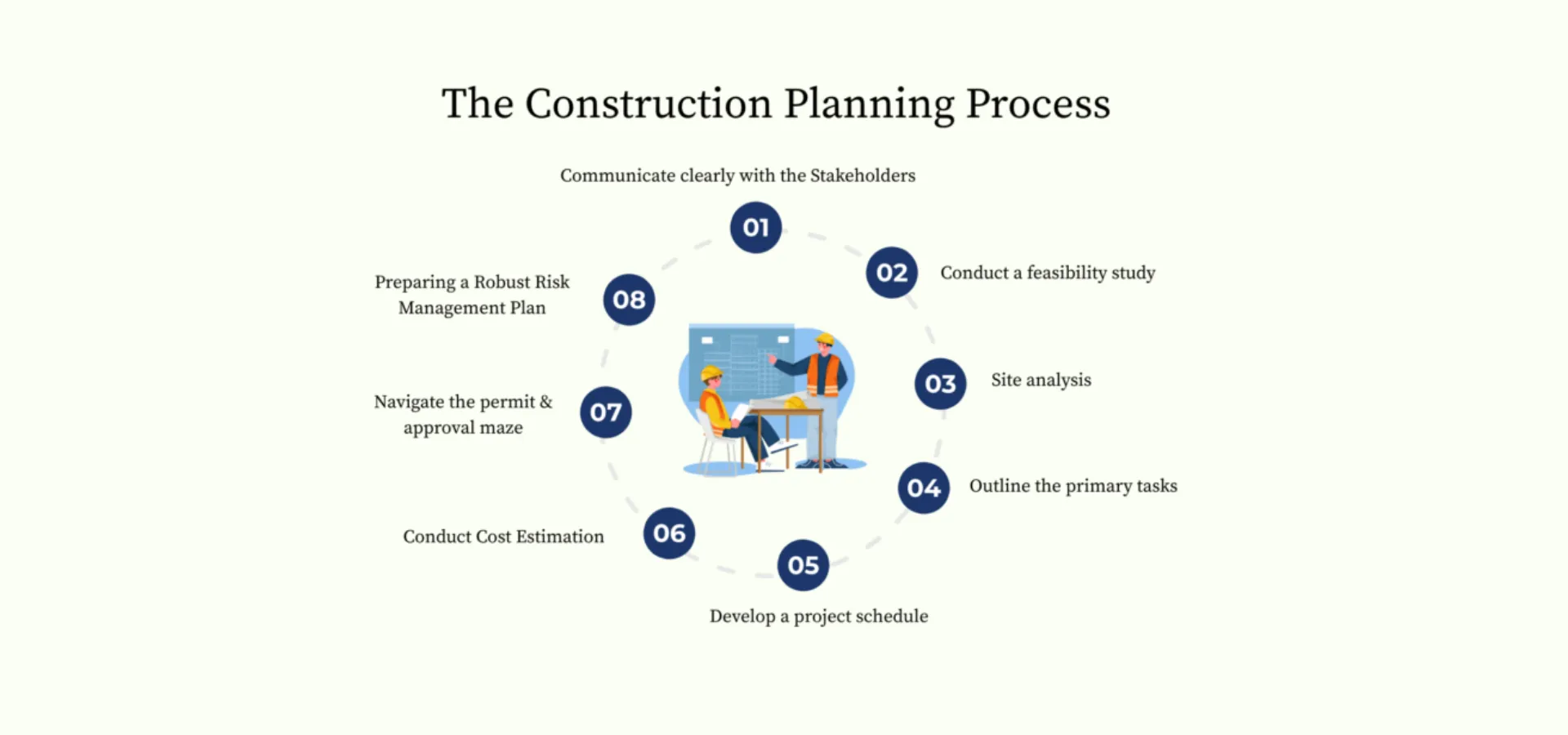
Construction in 2025 is more complex, competitive, and technology-driven than ever before. Rising material costs, tighter timelines, stricter regulations, and evolving customer expectations require structured and strategic construction project planning. Whether you are building a residential house, commercial complex, or infrastructure project, proper planning is the foundation of success.
Table of Contents
This comprehensive guide explains the key steps in construction project planning, including budgeting, material selection, scheduling, risk management, and execution strategies. By following these principles, builders, contractors, and developers can ensure smooth project completion with minimal delays and maximum efficiency.
Why Construction Project Planning Is Important
Effective project planning ensures:
- Cost control and budget optimization
- Timely completion of work
- Proper material management
- Reduced risk of errors and rework
- Improved coordination between teams
- Higher construction quality
Without proper planning, projects often face delays, budget overruns, material wastage, and safety issues.
Step-by-Step Construction Project Planning Process
1. Project Definition and Scope Planning
The first step is clearly defining the project scope.
Key aspects include:
- Type of construction (residential, commercial, industrial)
- Project size and design requirements
- Site conditions and location
- Timeline expectations
- Budget constraints
A well-defined scope prevents confusion and ensures all stakeholders are aligned.
2. Budget Estimation and Cost Planning
Accurate cost estimation is crucial for financial stability.
| Cost Component | Description |
|---|---|
| Material Cost | Cement, TMT bars, sand, aggregates, etc. |
| Labor Cost | Skilled and unskilled workforce |
| Equipment Cost | Machinery and tools |
| Transportation | Logistics and delivery charges |
| Contingency | Unexpected expenses |
Proper budgeting avoids financial strain and project interruptions.
3. Site Analysis and Feasibility Study
Before construction begins, the site must be evaluated.
Factors to consider:
- Soil quality and bearing capacity
- Water availability
- Accessibility
- Environmental conditions
- Legal approvals
A detailed feasibility study ensures safe and efficient construction.
4. Design and Architectural Planning
Design planning defines the layout and structure of the building.
- Architectural drawings
- Structural design
- Electrical and plumbing layouts
- Material specifications
Modern design tools and software help improve accuracy and visualization.
5. Material Selection and Procurement Planning
Material quality directly affects construction durability.
| Material | Key Considerations |
|---|---|
| TMT Bars | Grade, strength, IS certification |
| Cement | Type, brand, freshness |
| Aggregates | Size, purity |
| Sand | Quality and moisture content |
| Finishing Materials | Tiles, paint, fittings |
Procurement planning ensures timely availability and cost control.
6. Scheduling and Timeline Management
Project scheduling ensures tasks are completed in sequence.
- Define start and end dates
- Create milestone-based timelines
- Allocate resources for each phase
- Use project management tools
Proper scheduling prevents delays and improves productivity.
7. Workforce Planning and Management
Efficient workforce management is essential.
- Assign roles and responsibilities
- Ensure skilled labor availability
- Maintain safety standards
- Monitor performance
Well-managed teams ensure quality work and timely completion.
8. Risk Assessment and Management
Construction projects involve various risks.
| Risk Type | Example |
|---|---|
| Financial | Budget overruns |
| Operational | Labor shortage |
| Environmental | Weather delays |
| Safety | Workplace accidents |
Identifying and managing risks reduces project uncertainty.
9. Quality Control and Assurance
Quality control ensures that materials and workmanship meet standards.
- Regular inspections
- Testing of materials
- Compliance with IS codes
- Supervision by engineers
Quality assurance improves structural durability and safety.
10. Safety Planning and Compliance
Worker safety is a top priority.
- Provide safety equipment
- Follow site safety protocols
- Conduct safety training
- Ensure regulatory compliance
A safe site reduces accidents and legal issues.
11. Monitoring and Progress Tracking
Continuous monitoring ensures the project stays on track.
- Track progress against schedule
- Compare actual vs planned cost
- Address delays immediately
- Maintain documentation
Monitoring helps maintain efficiency and accountability.
12. Final Inspection and Project Handover
Before completion:
- Conduct structural inspection
- Verify finishing quality
- Check utilities and systems
- Ensure compliance with standards
Proper handover ensures client satisfaction and project success.
Modern Trends in Construction Planning (2025)
Construction planning in 2025 incorporates advanced technologies:
- Digital project management tools
- Building Information Modeling (BIM)
- AI-based cost estimation
- Smart material tracking systems
- Sustainable construction practices
These innovations improve efficiency and accuracy.
Common Mistakes to Avoid in Construction Planning
- Incomplete project scope
- Poor budget estimation
- Delayed material procurement
- Lack of skilled workforce
- Ignoring risk management
- Poor communication between teams
Avoiding these mistakes ensures smooth execution.
Frequently Asked Questions (FAQs)
What is construction project planning?
Construction project planning is the process of organizing tasks, resources, budget, and timelines to ensure successful completion of a construction project.
Why is planning important before construction begins?
Planning helps reduce errors, control costs, manage resources, and ensure timely completion.
What is the biggest challenge in construction planning?
Balancing cost, time, and quality while managing risks and resources is the biggest challenge.
How do I estimate construction costs accurately?
By analyzing material costs, labor charges, equipment expenses, and adding contingency funds.
What role does scheduling play in construction?
Scheduling ensures tasks are completed in sequence and prevents delays.
What is BIM in construction planning?
Building Information Modeling (BIM) is a digital tool that helps in design visualization and project coordination.
How can risks be minimized in construction projects?
By identifying potential risks early and implementing preventive strategies.
Why is quality control important?
It ensures the building meets safety standards and lasts longer.
How do I select the right construction materials?
Choose certified materials from trusted suppliers based on project requirements.
What is the role of a project manager?
A project manager oversees planning, execution, coordination, and completion of the project.
How does technology improve construction planning?
Technology enhances accuracy, efficiency, communication, and real-time tracking.
Can small projects benefit from proper planning?
Yes, planning is essential for projects of all sizes to avoid delays and cost overruns.
Conclusion
Construction project planning is the backbone of successful building execution in 2025. With increasing complexity in design, materials, and regulations, structured planning has become more critical than ever. From defining project scope and budgeting to scheduling, risk management, and quality control, every step plays a vital role in achieving a successful outcome.
Modern construction planning is not just about organizing tasks—it is about integrating technology, optimizing resources, ensuring sustainability, and delivering high-quality structures within budget and timeline constraints. Builders and developers who invest time in detailed planning can significantly reduce risks, improve efficiency, and enhance project outcomes.
A well-planned construction project leads to better coordination, smoother execution, reduced wastage, and long-term structural reliability. It ensures that every phase—from foundation to finishing—is executed with precision and professionalism.
In 2025, the construction industry demands smart planning, advanced tools, and strategic decision-making. By following the key steps outlined in this guide, you can build projects that are not only structurally strong but also cost-efficient, timely, and future-ready.
Successful construction is not just about building structures—it is about building them right, from the very first plan to the final completion.