Complete Steel Products Guide: TMT Bars, MS Plates, Pipes, Angles, Channels, Beams, Wires & More
Planning a house, commercial building, factory shed, boundary structure, road project or fabrication job? Learn how common steel products are used, what to check before ordering and how to plan your material requirements with confidence.
Steel is one of the most important materials in modern construction and fabrication. From the reinforced concrete in a home to the framework of a warehouse, the handrail on a staircase, a pipe installation or a roadside safety barrier, different steel products serve different purposes. Although they may all be made from steel, their shapes, grades, dimensions, manufacturing processes and performance requirements can vary significantly.
Choosing the right product is not simply a matter of selecting the lowest price per kilogram. Buyers should understand what each product is designed to do, which dimensions are required, whether a particular grade or standard is specified, how the material will be transported and stored, and whether the supplier can provide consistent documentation. A mismatch between the design and the supplied material can lead to delays, waste, rework and safety concerns.
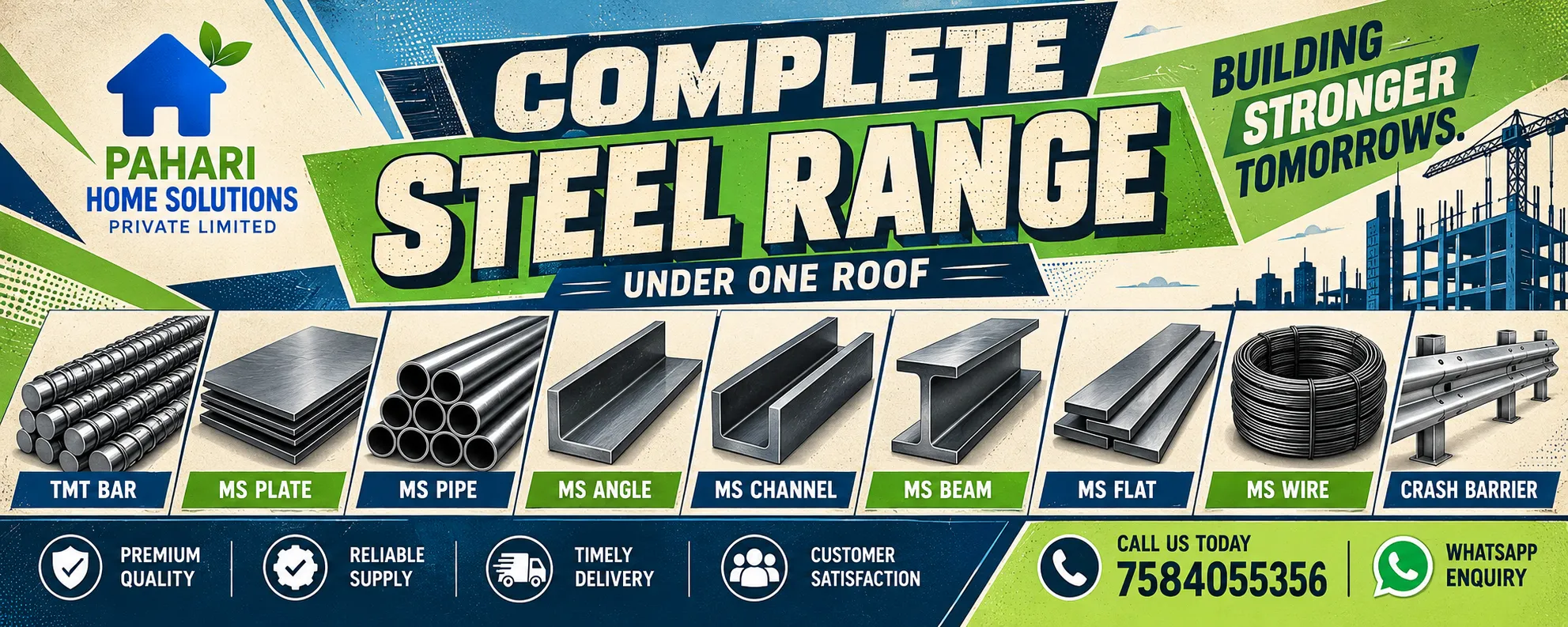
This guide introduces the major products shown in the Pahari Home Solutions steel range: TMT bars, MS angles, MS channels, MS beams, MS pipes, MS plates, crash barriers, MS flats and MS wires. It also explains practical buying checks, estimation, storage and frequently asked questions. Use it as a starting point for a discussion with your engineer, contractor, fabricator or steel supplier.
1. TMT Bars: Reinforcement for Concrete Construction
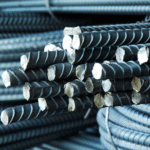
Thermo-Mechanically Treated (TMT) bars are reinforcing steel bars widely used in reinforced-concrete construction. Concrete performs well under compression, while steel reinforcement helps the structural member resist tensile forces and contributes to its designed performance. In a properly engineered building, reinforcement is selected and placed according to structural drawings, bar schedules and applicable codes.
TMT bars are commonly used in foundations, footings, columns, beams, slabs, staircases, retaining structures and other reinforced-concrete elements where specified by the structural engineer. The required bar diameter, grade, spacing, lap length, bend, anchorage and quantity depend on the design. Do not select reinforcement only by the size used in a neighbouring building or by a contractor’s rough estimate.
What should buyers check when purchasing TMT bars?
- Grade and standard: confirm the exact grade and applicable standard stated in the structural specification and product documentation.
- Diameter and quantity: check the bar sizes and quantities against the approved bar bending schedule or bill of quantities.
- Manufacturer identification: verify product markings, labels, invoices and available test or quality documentation.
- Condition: inspect for severe corrosion, contamination, damage or other conditions that may require assessment before use.
- Traceability: keep delivery records and product details with the project documents.
Bars should be cut, bent, placed and tied in accordance with the structural drawings and the applicable construction requirements. Avoid unauthorised welding, heating, rebending or substitutions. Any proposed change in grade or bar size should be reviewed and approved by the responsible structural engineer before installation.
Choosing TMT bars for a house or building
For a residential building, the correct reinforcement is the reinforcement specified by the engineer for that structure—not automatically the thickest or most expensive option. Soil conditions, number of floors, spans, loads, seismic considerations, concrete grade and design details influence the reinforcement schedule. A supplier can help with product availability and documentation, while the engineer must determine the design requirements.
Pahari Home Solutions lists steel products such as TMT bars for construction-material enquiries. Buyers may ask about available brands, sizes, grades, delivery arrangements and documentation. Confirm current stock and pricing before placing an order, and make sure the product supplied matches the project specification.
2. MS Plates: Versatile Flat Steel for Fabrication
Mild steel (MS) plates are flat steel products used in many fabrication, industrial, structural and general engineering applications. Depending on the specified grade, thickness, dimensions and design, plates may be cut, drilled, welded or formed into components. Examples include base plates, brackets, gussets, equipment supports, covers, platforms, tanks and fabricated assemblies.
The term “MS plate” describes a broad product category rather than a single specification. Plates can differ in thickness, width, length, grade, surface condition and applicable manufacturing standard. A plate suitable for one fabrication job may not be appropriate for a different load, environment or regulated application. Always provide the fabricator or supplier with the drawing or required dimensions.
Common uses of MS plates
- Base plates and connection components in engineered steelwork.
- Brackets, gussets, stiffeners and reinforcement pieces in fabricated assemblies.
- Machine guards, covers, panels and selected equipment components.
- Platforms, walkways, supports and general fabrication where the design allows.
- Custom-cut components made to approved workshop drawings.
Buying checks for MS plates
Confirm the required thickness, length, width, grade, quantity and any cutting tolerances. For projects that require certified material, ask for the relevant inspection or test documents. Check the surface and edges for damage, deep pitting, distortion or other defects that could affect fabrication. If plates will be exposed to moisture, chemicals or coastal conditions, discuss the specified protective coating or corrosion-control system with the designer or fabricator.
Do not use a plate’s visual thickness or weight as the only evidence of suitability. Measure and verify the supplied material using appropriate methods, and compare it with the purchase order and technical specification. For load-bearing components, the plate thickness and connection details must come from the engineering design.
3. MS Pipes and Hollow Sections
MS pipes and hollow steel sections are used in a broad range of construction, utility, industrial and fabrication projects. Round pipes may be specified for fluid conveyance or for certain structural and fabrication applications, while square and rectangular hollow sections are frequently used in frames, supports, gates, railings, furniture, sheds and fabricated structures. The exact product designation matters: a pipe intended for one service is not automatically suitable for another.
Where MS pipes may be used
- Fabricated gates, railings, grills and boundary structures.
- Frames, racks, supports and selected shed or canopy components.
- Mechanical and industrial applications where the pipe specification matches the service.
- Conduits or other utility-related applications only when the product is designed and approved for that purpose.
- General fabrication, repair and workshop projects.
Round pipe versus square or rectangular hollow section
Round pipes and hollow sections have different geometries and may be manufactured to different specifications. A square or rectangular section can be convenient for framing and joining flat surfaces, while a round section may suit other design requirements. Neither shape is universally stronger for every use; performance depends on dimensions, wall thickness, grade, support conditions, connection details and loading.
What to confirm before ordering pipes
State the shape, outside dimensions or nominal size, wall thickness, length, grade, applicable standard, quantity and intended use. Ask whether the product is supplied in standard lengths or needs cutting. Check for dents, crushed ends, excessive rust or distortion, and make sure the pipe specification is appropriate for the intended service. If it will carry water, gas or another fluid, use a product certified and approved for that service and comply with the relevant regulations.
For structural frames, pipe selection should be checked by a qualified designer. Do not estimate load-bearing capacity from outside diameter alone. Connections, weld quality, corrosion protection and how the frame is anchored can be just as important as the section itself.
4. MS Angles: L-Shaped Sections for Supports and Frames
MS angles have an L-shaped cross-section with two legs. They are common in fabrication and structural steelwork because their shape can be useful for framing, bracing, supports, brackets and connections. Angles may be equal-leg or unequal-leg, and the required size and thickness depend on the design.
Typical applications include shelving frames, support brackets, equipment stands, trusses and selected building or industrial structures. They may also be used in gates, racks and general fabrication. However, not every angle is suitable for a load-bearing application; its role, orientation, connection method and design forces must be considered.
How to specify MS angles
- Leg dimensions and whether the angle is equal-leg or unequal-leg.
- Thickness, length, grade and quantity.
- Required manufacturing standard and quality documentation.
- Cutting, drilling, hole patterns or fabrication requirements.
- Surface protection, such as an appropriate coating, where required.
Before purchase, check that the dimensions on the quotation match the drawing. For fabricated frames, discuss how the angle will be connected and whether the design needs stiffeners or additional bracing. A section that appears adequate by eye may not satisfy the actual loading or deflection requirements.
5. MS Channels: C-Shaped Sections for Structural and Fabrication Work
MS channels have a web and flanges that form a channel-shaped cross-section. They are used in selected frames, supports, equipment bases, trailers, racks and structural assemblies. Depending on the section size and design, channels may be installed singly, in pairs or as part of a larger assembly.
The channel’s depth, flange width, thickness, grade and length all affect its behaviour. Orientation matters too: the same section can respond differently depending on how it is supported and loaded. For that reason, channel selection for a structural or load-bearing use should be based on a drawing or engineering specification.
Channel buying checklist
Confirm the section designation and dimensions, grade, length, quantity and required tolerances. Inspect the material for excessive bending, twisting, damaged edges or corrosion. If channels are to be joined to plates, beams or other sections, make sure the connection details and fabrication method are agreed before cutting begins.
For general fabrication, channels can be useful where a shaped edge or recessed profile is needed. For a building, platform or machinery support, do not substitute a channel for a different section simply because it is available or cheaper. Any change should be checked by the responsible designer.
6. MS Beams: Structural Sections for Designed Frameworks
MS beams, including I-shaped or H-shaped sections where specified, are used in engineered structural frameworks and selected industrial applications. Their cross-section is designed to provide useful strength and stiffness for particular loading conditions. Beams may form part of building frames, industrial sheds, platforms, mezzanines, equipment supports and other engineered structures.
A beam is not selected by length alone. Section depth, flange width, web and flange thickness, steel grade, unbraced length, support conditions, connection design and the loads it carries all matter. A beam that works in one span or building may not be suitable for another. The final selection should be made by a qualified structural designer and match the approved drawings.
Before purchasing MS beams
- Use the exact section designation and grade from the design documents.
- Confirm length, quantity, weight basis and any required cutting or end preparation.
- Check the material identification and available quality documentation.
- Plan safe unloading, lifting and storage because beams can be heavy and awkward to handle.
- Discuss corrosion protection, primer or coating requirements for the project environment.
Do not drill, cut, notch or weld a structural beam without checking the approved design and relevant procedures. Alterations can affect capacity and stability. During installation, temporary bracing, lifting plans and safe work practices are essential, particularly for long sections and elevated work.
7. MS Flats: Flat Bars for Fabrication and General Use
MS flats, also called flat bars, are long, rectangular steel sections. They are widely used in fabrication because they can be cut to length, drilled, welded or incorporated into brackets and assemblies when the design and material grade permit. They may be used in gates, grills, frames, supports, clamps, straps, brackets and general workshop work.
Flat bars are available in different widths and thicknesses. A narrow, thin flat and a wide, thick flat can behave very differently under bending or loading, so specify both dimensions clearly. Length, grade, straightness, surface condition and any machining requirements should also be included in the order.
Choosing flats for a project
Start with the drawing or fabrication requirement. Tell the supplier the required width, thickness, length, number of pieces and grade if specified. If pieces need to be cut to exact dimensions, agree on tolerances and whether cutting is included. Check the edges and straightness before fabrication, especially when the finished part will be visible or needs to fit closely with other components.
For load-bearing or safety-critical components, do not decide dimensions based only on convenience. The flat bar’s orientation, unsupported length, connection and expected forces should be assessed as part of the complete assembly.
8. MS Wires and Wire Rods
Steel wire products are used in construction, manufacturing, binding, fencing, fabrication and many other applications. The term “MS wire” can refer to products with different diameters, surface finishes, tensile properties and intended uses. Wire rod is commonly a feedstock for further processing into wire and other products; finished wire may be supplied in coils or other packaging depending on the product.
One familiar construction use is binding wire for tying reinforcement bars in place before concrete is poured. Binding wire helps keep the reinforcement arrangement in position during installation, but it does not replace the structural reinforcement itself. Other wire products may be used in fencing, mesh, general tying and manufacturing where their specification is appropriate.
What to check when buying wire
- Diameter or gauge, grade and intended application.
- Coil weight, length where specified and packaging condition.
- Surface condition, flexibility and any coating requirement.
- Compatibility with the fabrication, binding or industrial process.
- Safe handling requirements for coils and cut wire ends.
Do not treat all wires as interchangeable. A product intended for simple tying is not automatically appropriate for a load-bearing, prestressing, electrical or other regulated application. For specialised uses, specify the relevant standard and obtain the product documentation. Store coils securely so they cannot roll, unwind unexpectedly or create a trip or cut hazard.
9. Crash Barriers: Steel Systems for Roadside Safety
Steel crash barriers are roadside safety systems designed to help manage vehicle impacts and reduce the risk of vehicles leaving the roadway or entering hazardous areas. Their performance depends on the complete tested or approved system—not just the visible steel rail. Rail profile, posts, spacers, fasteners, terminal treatments, transitions, installation height, foundations and layout all matter.
Crash barriers may be specified for roads, bridges, medians and other locations where a road authority or qualified highway designer determines that a barrier is appropriate. Product selection and installation must follow the relevant road authority requirements, approved drawings and applicable standards. A generic steel component should never be assumed to be a compliant crash barrier on its own.
What project teams should confirm
- Approved system type, rail profile, steel specification and coating.
- Required post spacing, installation height, anchorage and transitions.
- Terminals, end treatments, connection hardware and compatibility of components.
- Applicable authority specifications, inspection requirements and documentation.
- Correct installation by qualified personnel and inspection before the system is placed in service.
For road-safety products, follow the project specification and procure from a supplier able to confirm that the offered system matches the approved requirement. Do not mix components from different systems or improvise connections without written technical approval.
10. Steel Products at a Glance
This table gives a general overview. The final application always depends on the exact product specification and project design.
| Product | Typical applications | Key purchase details |
|---|---|---|
| TMT bars | Reinforced concrete foundations, columns, beams and slabs as designed | Grade, diameter, standard, quantity, markings and documentation |
| MS plate | Fabricated base plates, brackets, panels, supports and equipment parts | Thickness, width, length, grade, tolerances and surface condition |
| MS pipe / hollow section | Frames, railings, gates, supports and specified pipe services | Shape, size, wall thickness, grade, standard and intended service |
| MS angle | Brackets, frames, bracing and selected structural assemblies | Leg dimensions, thickness, length, grade and connection details |
| MS channel | Supports, frames, equipment bases and engineered assemblies | Section designation, dimensions, grade, length and straightness |
| MS beam | Engineered building frames, platforms and industrial structures | Exact section, grade, length, design documents and lifting plan |
| MS flat | Fabricated straps, brackets, gates, frames and workshop components | Width, thickness, length, grade and cutting tolerances |
| MS wire / wire rod | Binding, fencing, manufacturing and other specified uses | Diameter, grade, coil weight, coating and intended application |
| Crash barrier | Roadside and highway safety systems specified by the authority | Approved system, profile, coating, hardware and compliance documents |
11. How to Estimate Steel Quantity and Weight
Steel quantity estimation should be based on project drawings, a bill of quantities, bar bending schedules or a fabrication cutting list. Different product types need different estimation methods. For reinforcement, the bar schedule should account for diameter, cut length, bends, laps and detailing. For plates and sections, quantity may be calculated from the required number of pieces and their specified dimensions, then checked against the supplier’s standard lengths or weight basis.
- Start with approved drawings and a measured list of required items.
- Record product type, grade, dimensions, length, number of pieces and unit.
- For bar or section products sold by weight, verify the supplier’s stated unit weight and applicable dimensional standard.
- Allow for cutting waste and fabrication offcuts based on the actual cutting plan.
- Keep structural design changes separate from routine quantity adjustments; obtain engineer approval for design changes.
For a simple rectangular plate, the theoretical volume can be estimated from length × width × thickness, using consistent units. The approximate mass can then be calculated using the appropriate material density. However, actual invoiced weight can differ according to dimensions, tolerances, product standard and weighing method. Ask the supplier to clarify whether the quote is based on theoretical weight, actual weighbridge weight, piece count or another basis.
For TMT bars and structural sections, use a recognised weight table or manufacturer data applicable to the exact size and standard. Avoid relying on a random online calculator when a project requires documented quantities. The structural engineer or quantity surveyor should resolve discrepancies between the drawing, schedule and supplied material.
12. How to Buy Steel for a Construction or Fabrication Project
Step 1: Prepare a clear material list
Group the order by product: TMT bars, plates, angles, channels, beams, pipes, flats, wire or crash barrier components. List the grade, dimensions, lengths, quantity and any special requirement for each line. Attach drawings or a bill of quantities when possible. A precise list reduces back-and-forth and makes quotations easier to compare.
Step 2: Match the product to the specification
Do not compare two offers based on product name alone. Check whether the grades, sizes, standards, tolerances, coatings and documentation requirements match. If a supplier proposes an alternative, have the responsible engineer or project designer approve it before purchase.
Step 3: Compare the complete cost
Ask whether the quotation includes applicable taxes, cutting, loading, transport, unloading and other charges. Clarify the unit of sale, price validity, payment terms, delivery timeline and handling of damaged or short-supplied material. A low headline rate may not be the lowest delivered cost once all charges are included.
Step 4: Confirm delivery and site access
Long beams, pipes and bundles of bars may require suitable vehicles, unloading equipment and safe storage space. Tell the supplier about access restrictions, unloading hours, road conditions and the site’s capacity to handle the material. Arrange competent personnel and suitable lifting equipment before the truck arrives.
Step 5: Inspect and document the delivery
Compare the delivery with the purchase order. Check product markings, dimensions where appropriate, quantities, packaging, visible condition and documentation. Photograph damage or discrepancies and contact the supplier before the material is used. Keep invoices, test certificates, delivery challans and batch information with the project records.
13. What to Check Before Finalising Your Steel Order
- Product type and intended application are clearly identified.
- Grade, standard and technical requirements match the project specification.
- Dimensions, thickness, diameter, section designation and lengths are correct.
- Quantity is based on the approved schedule or fabrication list.
- Required test certificates, inspection documents or traceability details are agreed.
- Coating or corrosion protection is specified where the environment requires it.
- Delivery costs, taxes, cutting, loading and unloading responsibilities are clear.
- The site has a safe place to unload and store the material.
- The delivery timeline matches the construction or fabrication schedule.
- There is a process to report shortages, damage or specification mismatches.
14. Steel Handling, Storage and Corrosion Protection
Correct storage helps protect steel from avoidable damage and keeps the site organised. Where possible, store steel on stable supports above standing water and soil, with suitable separation between different grades, sizes and product types. Keep labels and identification readable. Do not block access routes or place heavy bundles where they could roll, slide or fall.
Steel may develop surface rust when exposed to moisture and oxygen. The significance depends on the product, degree of corrosion, intended use and applicable specification. Do not decide that heavily corroded or pitted material is acceptable simply because it can still be lifted. Ask the responsible engineer or quality professional to assess questionable material before it is used in a safety-critical application.
For outdoor or coastal environments, corrosion protection should be considered as part of the design. Depending on the application, this may involve an appropriate coating, galvanising or a planned maintenance system. The correct treatment depends on exposure, compatibility, preparation and the project requirements. Avoid applying an arbitrary coating to reinforcement or another product where it could affect bonding or performance; follow the engineer’s and manufacturer’s guidance.
Safe handling is equally important. Steel edges can be sharp, bundles can be unstable and long sections can swing during lifting. Use suitable lifting equipment, trained personnel, gloves and other task-appropriate protective equipment. Secure loads during transport and follow the site’s lifting and storage procedures.
15. Steel for Different Projects: What Information Should You Share?
Residential construction
Share the approved reinforcement schedule, required TMT grades and diameters, approximate delivery phases and site access details. The engineer or contractor should confirm the design and quantity.
TMT barsSpecified sectionsIndustrial shed or workshop
Provide the structural drawings, section list, member lengths, plate thicknesses, connection details and coating requirements. Confirm lifting and unloading arrangements in advance.
BeamsChannelsAnglesGate, railing or fabrication
Share a sketch or drawing with dimensions, finish, quantities, pipe or hollow-section sizes, flat-bar sizes and any cutting or drilling requirements.
PipesFlatsAnglesRoad or infrastructure work
Provide the approved specification, authority requirements, system details, coating requirements and documentation list. Road-safety systems need approved components and correct installation.
Crash barriersSpecified steel16. Why Source Steel Through a Clear, Specification-Led Process?
Reliable procurement starts with clear communication. A supplier needs to understand the required product, dimensions, quantity, delivery location and timing before a meaningful quotation can be prepared. For larger projects, it is useful to submit a written material list and drawings rather than relying on a verbal description. It also helps to confirm whether the product is available now or will need to be sourced, cut or transported from another location.
When discussing an order, ask practical questions: Is the exact grade available? What is the standard length? Is cutting available? Which documents will accompany the material? What is the delivery lead time? How will any discrepancy be handled? Clear answers reduce uncertainty and make it easier to coordinate the supplier, contractor, engineer and site team.
Pahari Home Solutions Pvt. Ltd. provides a point of contact for construction-material enquiries, including steel products shown in its product range. Customers can enquire about TMT bars, MS plates, pipes, angles, channels, beams, flats, wires and crash barrier products. Product availability, brand, specification, delivery coverage and current pricing should be confirmed directly for each order.
Looking for Steel Products?
Tell Pahari Home Solutions what you are building or fabricating, which steel products you need, the sizes or grades specified, your approximate quantity and delivery location. Having a bill of quantities, drawing or material list ready can help the team understand your enquiry.
17. Frequently Asked Questions About Steel Products
What are TMT bars used for?
TMT bars are used as reinforcement in reinforced-concrete structures such as foundations, columns, beams and slabs when specified by the structural design. The required grade, diameter, spacing and detailing must come from the approved drawings and applicable codes.
What is the difference between MS plate and MS flat?
MS plate is generally supplied as a flat sheet or plate in specified thicknesses and dimensions, often for cutting into fabricated components. MS flat or flat bar is a long rectangular section supplied in standard or specified lengths. The required form depends on the job and design.
Are MS pipes suitable for structural work?
Some pipes and hollow sections are used for structural and fabrication applications when their grade, dimensions and specification are appropriate. Not every pipe is suitable for every structural or fluid service. Confirm the intended application and engineering requirements before buying.
What are MS angles and channels used for?
Angles and channels are shaped steel sections used in frames, brackets, supports, bracing and other fabricated or engineered assemblies. Their suitability depends on the section dimensions, material grade, orientation, connections and loads.
How do I choose an MS beam size?
A beam size must be selected by a qualified structural designer based on the span, loads, support conditions, material grade, stability and connection details. Do not choose a beam solely by appearance or by copying a size from another project.
What information is needed for a steel quotation?
Provide product type, grade or standard, dimensions, thickness or diameter, lengths, quantity, any cutting or coating requirements, delivery location and required date. Drawings, a bill of quantities or a fabrication list are helpful for larger orders.
How can I estimate steel weight?
Use the relevant manufacturer or standard weight tables for the exact product and size, or calculate theoretical weight from dimensions and material density where appropriate. Clarify whether the supplier’s price is based on theoretical weight, actual weighed weight or piece count.
Can I substitute one steel grade or section for another?
Do not substitute a grade, diameter, thickness or section in a structural or safety-critical application without written approval from the responsible engineer or designer. Similar-looking products may have different mechanical properties or dimensions.
How should steel be stored at a construction site?
Store it on stable supports, away from standing water and direct ground contact where practical. Separate and label different products, secure bundles against rolling or falling, preserve traceability and use safe lifting procedures. Ask a qualified professional to assess material with significant corrosion or damage.
What are steel crash barriers used for?
Crash barriers are part of roadside safety systems designed to help manage vehicle impacts. The entire approved system—including rails, posts, spacers, fasteners, terminals and installation details—must match the project and road authority requirements.
Can I get current steel rates and availability by phone or WhatsApp?
You can contact Pahari Home Solutions to enquire about current rates, availability, product specifications and delivery. Prices and stock may change, so confirm the details directly before placing an order.
Build Stronger with the Right Steel Products
From TMT reinforcement bars to MS plates, pipes, angles, channels, beams, flats, wires and crash barrier systems, each steel product has a specific role. Match the product to the approved design, verify the grade and dimensions, plan delivery and storage, and keep the relevant documents for your project.
Pahari Home Solutions Pvt. Ltd.
For steel product enquiries, availability and quotation requests, contact the team with your material list and delivery details.
Important: This article is general product information, not engineering advice or a substitute for project specifications. Structural steel, reinforcement and road-safety systems must be selected, detailed and installed according to the approved design, applicable standards and qualified professional guidance. Product availability, brands, specifications and prices should be confirmed directly with the supplier.