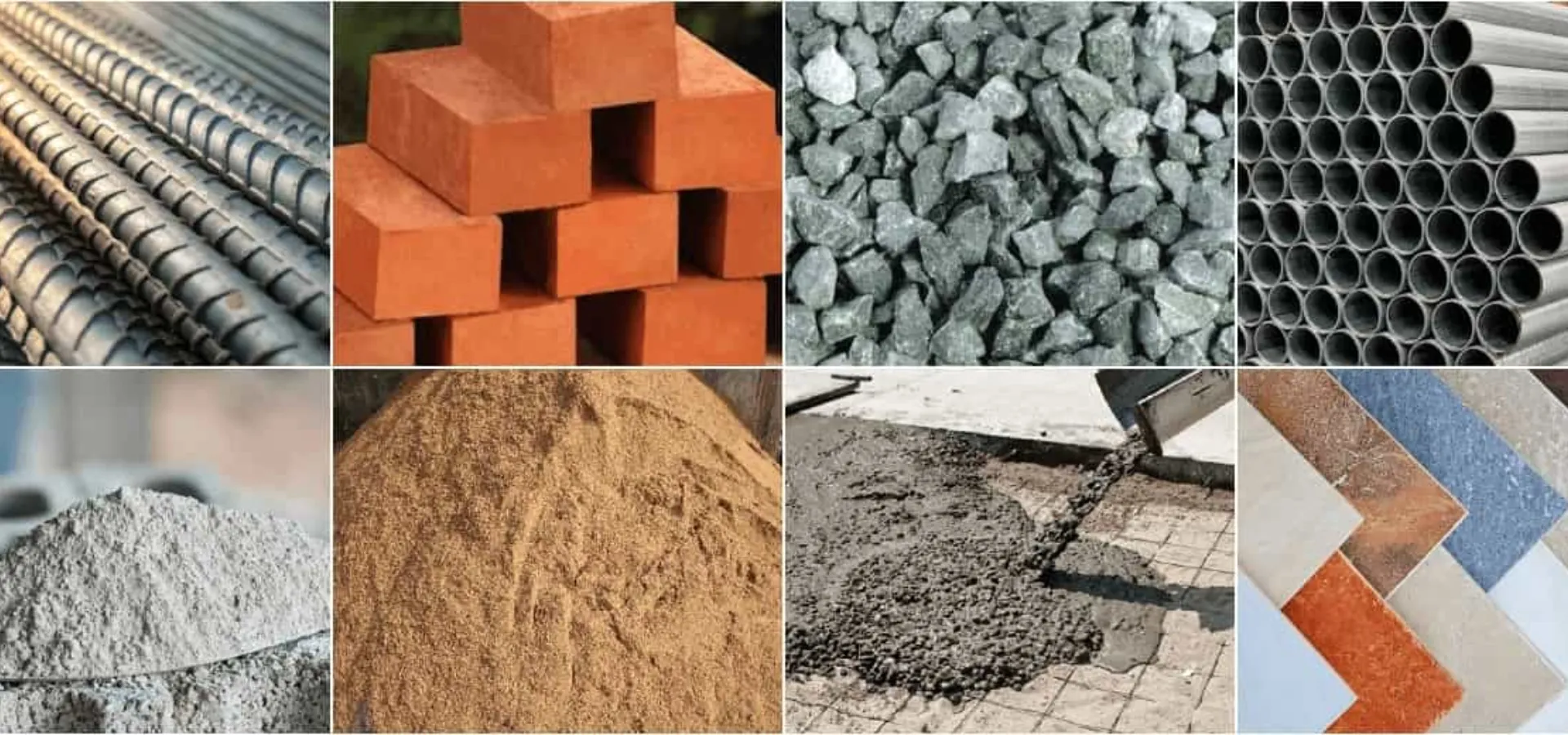
The construction industry in India continues to evolve rapidly in 2025, driven by infrastructure development, urban housing demand, and modern building standards. Whether you are constructing a residential house, a commercial building, or an industrial structure, choosing the right building materials is the foundation of safe, durable, and cost-effective construction.
Understanding the basic construction materials and their applications helps homeowners, builders, and contractors make informed decisions, avoid costly mistakes, and ensure long-term structural performance. Below is a complete and detailed guide to the 12 most essential building and construction materials in 2025, widely used across India.
Table of Contents
1. Cement – The Binding Element of Construction
Cement is one of the most fundamental materials in construction. It acts as a binding agent when mixed with sand, aggregates, and water to form concrete or mortar. In 2025, modern construction relies heavily on high-quality cement to ensure strength, durability, and workability.
Different types of cement such as PPC, OPC, and blended cement are used depending on structural requirements, environmental conditions, and budget. Quality cement ensures proper bonding, crack resistance, and long service life of structures.
2. TMT Bars – The Backbone of RCC Structures
TMT (Thermo-Mechanically Treated) bars provide tensile strength to reinforced concrete structures. Concrete alone cannot withstand tension, which makes TMT bars essential for structural stability.
In 2025, high-grade TMT bars such as Fe 500D and Fe 550D are widely used for residential, commercial, and infrastructure projects due to their strength, ductility, corrosion resistance, and earthquake resistance.
3. Sand – Essential for Concrete and Masonry
Sand is a key ingredient in concrete, mortar, and plaster. It fills voids between aggregates and ensures workability and strength. River sand, manufactured sand (M-sand), and crushed sand are commonly used in modern construction.
Quality sand improves bonding, reduces shrinkage, and enhances the finish of plaster and masonry work.
4. Aggregates – Providing Strength and Stability
Aggregates include crushed stone, gravel, and coarse materials used in concrete. They form the bulk of concrete and significantly influence its strength and durability.
Proper grading of aggregates is critical for load-bearing capacity, reduced cracking, and long-lasting concrete structures.
5. Bricks and Blocks – Building Walls and Partitions
Bricks and blocks are used for constructing walls, partitions, and boundary structures. Traditional clay bricks, fly ash bricks, AAC blocks, and concrete blocks are commonly used in 2025.
Modern blocks such as AAC and fly ash bricks offer better insulation, uniform size, reduced weight, and faster construction compared to conventional bricks.
6. Steel – Structural Support Beyond Reinforcement
Apart from TMT bars, structural steel such as angles, channels, beams, and columns plays a major role in modern construction. Steel provides flexibility in design, faster construction, and high load-bearing capacity.
Steel is widely used in commercial buildings, warehouses, factories, and modern residential structures.
7. Wood – Used in Finishing and Framework
Wood continues to be an important construction material, mainly used for doors, windows, formwork, furniture, and interior finishes. In 2025, treated and engineered wood products are preferred for durability and termite resistance.
Properly treated wood enhances aesthetics while maintaining structural reliability.
8. Tiles and Flooring Materials – Enhancing Durability and Design
Tiles are used for flooring and wall finishes in residential and commercial buildings. Ceramic, vitrified, porcelain, and marble tiles are widely used due to their durability, easy maintenance, and visual appeal.
Modern construction focuses on tiles that offer anti-slip properties, water resistance, and long-lasting finish.
9. Paints and Coatings – Protection and Aesthetics
Paints serve both decorative and protective purposes. Exterior paints protect buildings from weather, moisture, and UV damage, while interior paints enhance appearance and hygiene.
In 2025, eco-friendly, low-VOC paints with higher durability and washability are increasingly preferred.
10. Doors and Windows – Safety, Ventilation, and Design
Doors and windows play a vital role in security, ventilation, lighting, and overall building aesthetics. Materials such as steel, UPVC, aluminum, and engineered wood are commonly used.
Modern doors and windows provide better insulation, soundproofing, and weather resistance.
11. Roofing Materials – Protection from the Elements
Roofing materials protect structures from rain, heat, and environmental exposure. Roofing sheets, concrete slabs, metal sheets, and modern roofing systems are widely used depending on design and climate.
Quality roofing materials improve energy efficiency and increase building lifespan.
12. Sanitaryware and Plumbing Materials – Essential for Functionality
Sanitaryware includes toilets, wash basins, cisterns, and plumbing fixtures. These materials ensure hygiene, water efficiency, and daily comfort.
In 2025, water-saving sanitary fittings and durable plumbing systems are essential for sustainable construction.
Importance of Choosing Quality Construction Materials
Using quality materials ensures:
- Structural safety and durability
- Lower maintenance and repair costs
- Better resistance to weather and environmental damage
- Improved comfort and aesthetics
- Higher property value
Compromising on material quality can lead to cracks, leaks, corrosion, and reduced building lifespan.
Trends in Construction Materials in 2025
Modern construction emphasizes sustainability, durability, and efficiency. Builders are increasingly choosing eco-friendly materials, certified steel, blended cement, energy-efficient doors and windows, and low-maintenance finishes to meet current and future standards.
Conclusion
Construction in 2025 demands smarter material choices that balance strength, safety, sustainability, and cost efficiency. The 12 basic building and construction materials listed above form the foundation of almost every modern structure, from homes to large infrastructure projects.
Understanding the role and importance of each material helps builders and homeowners plan better, reduce risks, and achieve long-lasting results. A strong building begins with the right materials, chosen carefully and sourced from trusted suppliers.
When quality materials come together with skilled workmanship, the result is a structure that stands strong for generations—safe, durable, and built for the future.