Autoclaved Aerated Concrete (AAC) blocks are redefining modern construction with their lightweight, energy-efficient, and eco-friendly characteristics. Whether you are a homeowner, builder, or contractor in Purba Medinipur, Paschim Medinipur, or across West Bengal, understanding every aspect of AAC blocks is essential before you begin your next project. Here is The Complete Guide to AAC Blocks: Price, Size, Weight, Density & Advantages
Table of Contents
This in-depth guide covers everything you need to know about AAC blocks — from price and size to weight, density, and their numerous advantages in construction.
What Are AAC Blocks?
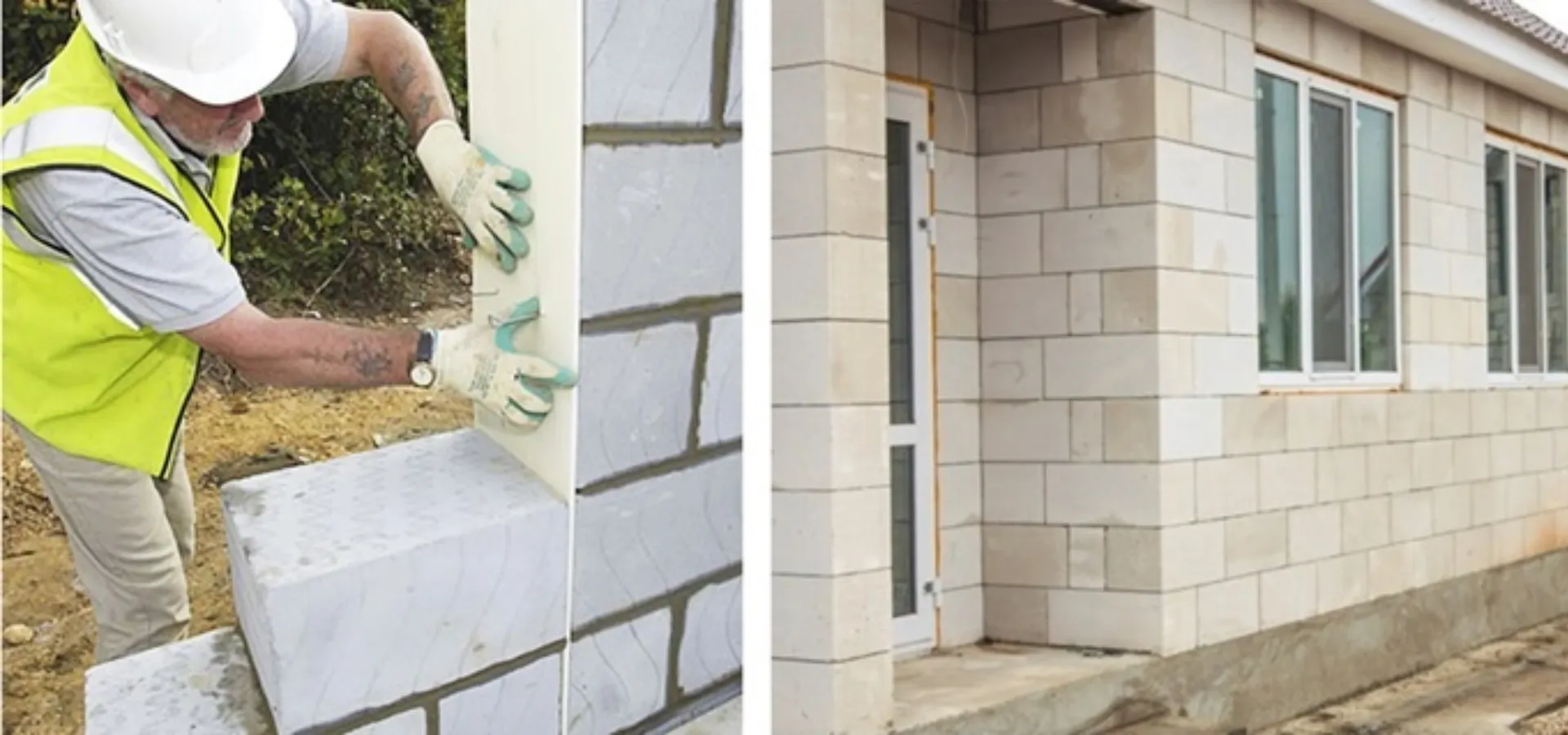
AAC Blocks (Autoclaved Aerated Concrete) are precast, lightweight concrete blocks made from a mixture of cement, lime, sand, water, and an aeration agent. They are cured under high pressure steam in an autoclave, creating microscopic air pockets that deliver superior insulation and performance compared to traditional clay bricks.
AAC blocks are widely used in:
- Residential homes
- Commercial complexes
- Industrial structures
- Institutional buildings
AAC Block Composition
The key ingredients used in AAC block manufacturing include:
| Component | Function |
|---|---|
| Cement | Provides structural strength |
| Lime | Enhances workability |
| Sand | Acts as fine aggregate |
| Gypsum | Improves setting time |
| Aluminium Powder | Creates air bubbles for lightweight properties |
| Water | Hydrates the mixture |
When cured under high pressure in autoclaves, AAC transforms into a strong, light, porous structure ideal for modern construction needs.
AAC Block Sizes & Standard Dimensions
AAC blocks are available in multiple standard sizes to suit different construction needs. The most commonly used sizes include:
| Block Type | Length | Height | Thickness |
|---|---|---|---|
| Standard AAC Block | 600 mm | 200 mm | 100–300 mm |
| Large Format AAC Block | 600 mm | 200 mm | 75–150 mm |
| Split AAC Block | 600 mm | 400 mm | 100–200 mm |
These sizes help reduce masonry joints, increase construction speed, and offer flexibility in architectural design.
AAC Block Weight & Density
One of the biggest advantages of AAC blocks is their lightweight nature, which significantly reduces the dead load on the structure.
AAC Block Weight
The weight of an AAC block depends on its size and density. As compared to conventional clay bricks (weighing 3–4 kg per brick), AAC blocks can weigh as low as 8–15 kg per block, depending on thickness and type.
AAC Block Density
Density is a critical parameter that influences strength, insulation, and structural performance. AAC block density typically ranges from:
- 400 – 850 kg/m³ (lightweight AAC blocks)
- 900 – 1100 kg/m³ (medium density)
- 1100 – 1600 kg/m³ (higher density for structural applications)
Lower density means lighter blocks, better insulation, and easier handling, while higher density offers greater load-bearing capacity.
AAC Block Price (2025)
Pricing for AAC blocks varies based on size, density, brand, and manufacturing quality. Here’s a general reference for 2025 prices across India — actual rates in Purba Medinipur and Paschim Medinipur may vary based on delivery and supply conditions:
| AAC Block Type | Approx. Price per Block |
|---|---|
| 600×200×100 mm | ₹75 – ₹90 |
| 600×200×150 mm | ₹110 – ₹130 |
| 600×200×200 mm | ₹140 – ₹160 |
| Split AAC Blocks | ₹160 – ₹190 |
📌 Prices are indicative and may vary with market conditions, GST, transportation, and bulk order discounts.
For daily updated AAC block prices in your area, contact us.
Advantages of AAC Blocks
AAC blocks offer a compelling set of benefits that make them a preferred alternative to traditional bricks and concrete blocks:
1. Excellent Thermal Insulation
The air pockets in AAC blocks act as natural insulators, keeping interiors cooler in summer and warmer in winter. This leads to reduced energy bills and enhanced living comfort.
2. Lightweight & Easy Handling
AAC blocks weigh significantly less than conventional bricks, which:
- Reduces structural dead load
- Enables faster masonry work
- Reduces labour fatigue
3. Fire Resistance
AAC blocks are highly fire resistant, withstanding high temperatures for long periods. This makes them a safe choice for residential and commercial buildings.
4. Sound Insulation
The porous structure helps reduce noise transmission, making AAC blocks ideal for buildings in busy or urban areas.
5. Eco-Friendly Construction
AAC blocks are manufactured with minimal raw materials and generate less waste. They are energy-efficient and recyclable — aligning with green building principles.
6. Higher Strength & Durability
Despite being lightweight, AAC blocks offer excellent compressive strength, making them suitable for load-bearing walls and multi-storey buildings.
7. Precision & Uniformity
AAC blocks are highly uniform in size, which:
- Reduces plaster requirement
- Minimises joint thickness
- Ensures neater masonry finishes
8. Pest & Termite Resistance
Unlike clay bricks, AAC blocks do not provide nourishment to pests or termites, protecting your structure from infestations.
AAC Blocks vs Traditional Clay Bricks
| Property | AAC Blocks | Clay Bricks |
|---|---|---|
| Weight | Light (8–15 kg) | Heavy (3–4 kg per brick) |
| Thermal Insulation | Excellent | Poor |
| Fire Resistance | High | Moderate |
| Work Speed | Fast | Slower |
| Labour Cost | Lower | Higher |
| Environmental Impact | Lower | Higher |
AAC blocks clearly outperform traditional clay bricks in terms of efficiency, sustainability, and long-term cost savings.
Best Practices for AAC Block Masonry
To achieve optimal results when using AAC blocks:
- Use thin-bed mortar or adhesive for better bonding
- Keep blocks dry before laying
- Protect blocks from rain during storage
- Ensure proper joint alignment for strength and insulation
- Use compatible plaster and finishes
Proper handling and installation increase structural performance and extend service life.
Applications of AAC Blocks
AAC blocks are suitable for a wide range of construction needs:
- Load-bearing walls in residential and commercial buildings
- Partition walls for interior spaces
- Perimeter walls offering sound and thermal insulation
- High-rise buildings due to lightweight properties
- Schools, hospitals, and public buildings for fire safety and comfort
Frequently Asked Questions (FAQs)
1. What is the best AAC block size for residential construction?
For most homes, 600×200×100 mm and 600×200×150 mm blocks provide a good balance of strength and insulation.
2. How much does an AAC block cost in June 2025?
Prices typically range from ₹75 to ₹190 per block depending on size and density. Local delivery rates may vary.
3. Are AAC blocks suitable for load-bearing walls?
Yes. Higher density AAC blocks (above 1000 kg/m³) are used for load-bearing applications when designed appropriately.
4. Do AAC blocks save energy in buildings?
Absolutely. Their thermal insulation reduces air-conditioning and heating needs, cutting energy bills.
5. Are AAC blocks eco-friendly?
Yes. AAC blocks use less raw material, generate less waste, and have lower embodied energy than conventional bricks.
6. How heavy are AAC blocks?
Weights vary by size and density, usually between 8 to 15 kg per block.
7. Can AAC blocks be used for all types of buildings?
Yes, they are versatile and suitable for homes, offices, schools, hospitals, and industrial buildings.
8. What density of AAC block is best?
For general construction, a density range of 600–900 kg/m³ offers thermal performance and good strength. Higher densities are used for structural load requirements.
9. Are AAC blocks termite resistant?
Yes. AAC blocks do not attract termites, providing better long-term performance.
10. How do AAC block prices vary by region?
Prices depend on brand, delivery location, fuel costs, and demand. Contact local suppliers for precise pricing.
Conclusion
AAC blocks represent a modern, sustainable, and high-performance building solution that outperforms traditional bricks on nearly every front — from energy efficiency and structural strength to speed of construction and environmental impact. With benefits like superior insulation, fire resistance, lighter weight, and faster workability, AAC blocks are increasingly becoming the material of choice for builders and homeowners alike.
For accurate AAC block price lists, best size recommendations, and reliable supply in Purba Medinipur, Paschim Medinipur, Jhargram, Kolkata, Howrah, and other areas of West Bengal, reach out to us.
📞 For orders & enquiries: +91 7584055356
📧 Mail us on official@paharihomesolutions.in
🌐 Visit Steel Sathi https://steelsathi.com/
🏢 Pahari Home Solutions Pvt. Ltd. – One Stop Solution for All Your Construction Needs!
Build smarter, save energy, and construct a sustainable future with AAC blocks.