Table of Contents
Quality in construction materials is the foundation of safe, durable, and cost-efficient buildings. In 2025, with rising expectations around sustainability, safety standards, and long-term performance, ensuring material quality is more critical than ever. From cement and TMT bars to tiles, paints, and aggregates, every component used in construction directly influences structural integrity and lifecycle costs.
This comprehensive guide explains how to ensure quality in construction materials, the latest standards in 2025, practical inspection methods, supplier selection criteria, and common pitfalls to avoid. It also includes detailed tables and SEO-focused FAQs to help builders, contractors, engineers, and homeowners make informed decisions.
Why Material Quality Matters in Modern Construction
Construction materials determine:
- Structural strength and safety
- Durability and lifespan
- Resistance to environmental conditions
- Maintenance requirements
- Overall project cost
Low-quality materials may reduce initial costs but lead to long-term risks such as cracks, corrosion, leakage, and even structural failure. Investing in quality materials ensures reliability and peace of mind.
Key Construction Materials and Quality Parameters
1. Cement Quality Standards
Cement is the binding element in concrete and mortar.
| Parameter | Importance |
|---|---|
| Compressive Strength | Determines load-bearing capacity |
| Fineness | Affects hydration and strength |
| Setting Time | Ensures proper application |
| Soundness | Prevents expansion and cracks |
| IS Certification | Confirms compliance with BIS standards |
2. TMT Bars Quality Standards
TMT bars provide tensile strength to RCC structures.
| Parameter | Importance |
|---|---|
| Yield Strength | Indicates load-bearing capacity |
| Ductility | Ensures earthquake resistance |
| Corrosion Resistance | Improves durability |
| Rib Pattern | Enhances bonding with concrete |
| IS 1786 Certification | Ensures standard compliance |
3. Aggregates and Sand Quality
Aggregates form the bulk of concrete.
| Parameter | Importance |
|---|---|
| Cleanliness | Prevents contamination |
| Size Distribution | Ensures proper compaction |
| Strength | Affects overall durability |
| Moisture Content | Influences mix ratio |
4. Bricks and Blocks
| Parameter | Importance |
|---|---|
| Compressive Strength | Structural stability |
| Water Absorption | Prevents moisture damage |
| Shape and Size | Ensures proper alignment |
5. Paints and Finishing Materials
| Parameter | Importance |
|---|---|
| Adhesion | Long-lasting finish |
| Weather Resistance | Protects surfaces |
| Washability | Easy maintenance |
2025 Trends in Construction Material Quality
The construction industry in 2025 is driven by:
- Certified and traceable supply chains
- Sustainable materials like fly ash cement
- High-ductility steel for seismic safety
- Low-VOC paints and eco-friendly finishes
- Digital quality tracking and testing
Builders are prioritizing both performance and environmental impact.
Steps to Ensure Quality in Construction Materials
1. Source from Authorized Suppliers
Always purchase from certified dealers and distributors who provide genuine materials with proper documentation.
2. Verify Certifications
Check for:
- ISI marks
- BIS compliance
- Brand embossing
- Batch details
Certified materials meet standard requirements.
3. Conduct On-Site Inspection
Perform visual checks:
- Cement: No lumps, fresh color
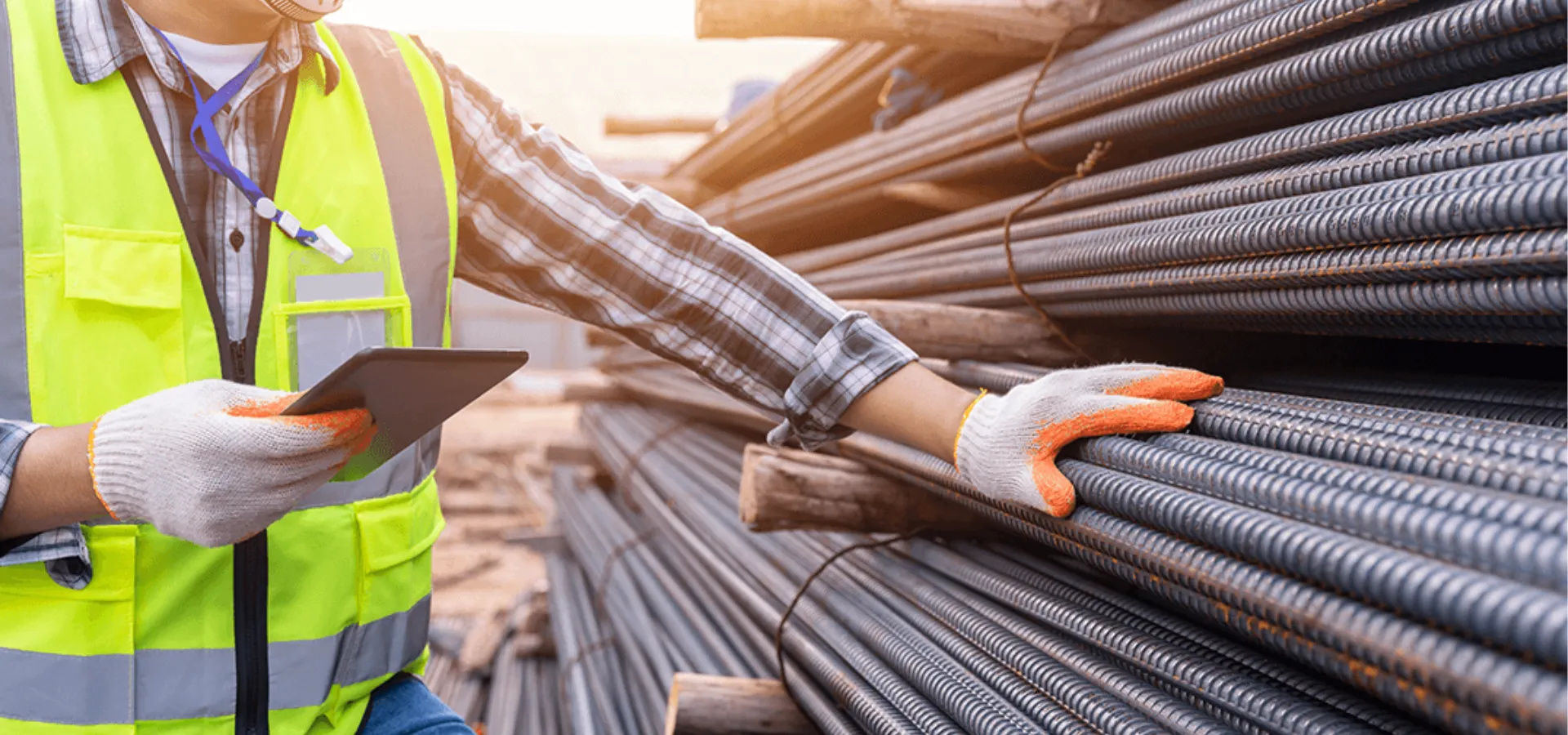
- Steel: No deep rust, uniform ribs
- Bricks: Uniform shape and size
- Sand: Clean and free from impurities
4. Laboratory Testing
For large projects, conduct:
- Compressive strength tests
- Tensile strength tests
- Chemical composition analysis
- Water absorption tests
These tests confirm performance under real conditions.
5. Proper Storage and Handling
Even high-quality materials can degrade if stored improperly.
- Store cement in dry areas
- Keep steel elevated
- Protect aggregates from contamination
- Seal paint containers
6. Maintain Documentation
Keep records of:
- Purchase invoices
- Test certificates
- Delivery challans
This ensures accountability and traceability.
Comparison: Good Quality vs Poor Quality Materials
| Aspect | Good Quality Materials | Poor Quality Materials |
|---|---|---|
| Strength | High and consistent | Low and variable |
| Durability | Long-lasting | Short lifespan |
| Cost | Slightly higher initial | Higher long-term repair cost |
| Safety | Reliable | Risk-prone |
| Maintenance | Minimal | Frequent repairs |
Role of Supplier in Quality Assurance
A reliable supplier ensures:
- Genuine products
- Proper storage
- Accurate weight and measurement
- Timely delivery
- Technical guidance
Choosing the right supplier is as important as choosing the right material.
Common Mistakes to Avoid
- Buying materials based on price alone
- Ignoring certification marks
- Mixing different grades randomly
- Skipping quality checks
- Using expired or damaged materials
Avoiding these mistakes ensures better construction outcomes.
Frequently Asked Questions (FAQs)
Why is quality important in construction materials?
Quality materials ensure structural strength, durability, safety, and long-term performance, reducing maintenance costs and risks.
How can I verify cement quality before use?
Check ISI marking, manufacturing date, absence of lumps, and conduct basic tests like float and touch tests.
What are the signs of poor-quality TMT bars?
Irregular ribs, lack of brand embossing, excessive rust, and underweight bars indicate poor quality.
Is laboratory testing necessary for small projects?
For small projects, basic checks may suffice, but for large projects, lab testing is recommended for accuracy.
How does poor material quality affect buildings?
It can cause cracks, corrosion, leakage, reduced strength, and even structural failure.
Can storage conditions affect material quality?
Yes. Moisture, heat, and contamination can degrade materials like cement and steel.
What certifications should I look for in construction materials?
Look for ISI marks and compliance with BIS standards.
Are eco-friendly materials reliable?
Yes. Modern eco-friendly materials are tested for durability and performance.
How can I ensure I am buying genuine materials?
Purchase from authorized dealers and verify documentation and branding.
What is the most critical material in construction?
All materials are important, but cement and TMT bars play a major role in structural strength.
Does higher cost mean better quality?
Not always, but extremely low-cost materials often indicate compromised quality.
How often should materials be tested on site?
Each batch should be checked before use, especially in large projects.
Conclusion
Ensuring quality in construction materials is not just a technical requirement—it is a commitment to safety, durability, and long-term performance. In 2025, with advanced construction techniques and stricter standards, the importance of certified materials and proper quality checks has increased significantly.
From cement and TMT bars to aggregates, tiles, and paints, every material plays a crucial role in building strong and reliable structures. By sourcing materials from trusted suppliers, verifying certifications, conducting inspections, and following proper storage practices, builders and homeowners can ensure superior construction outcomes.
Investing in quality materials may slightly increase initial costs, but it significantly reduces maintenance expenses, enhances structural safety, and improves overall property value. Quality construction begins with quality materials—and quality materials are the foundation of a strong and sustainable future.
Building with confidence starts with choosing the right materials and ensuring their quality at every stage of construction.