Build Stronger
Buy UltraTech
Pahari Home Solutions supplies UltraTech cement for foundations, slabs, columns, walls and finishing work across Purba Medinipur, Paschim Medinipur and Jhargram.
Cement at your site, when you need it
Plan your truckload with transparent quantity, delivery and billing coordination for active construction sites.
One portfolio. Every stage.
UltraTech’s product range covers routine masonry and plastering through critical RCC work. The right choice depends on the structural design, exposure, curing practice and advice of your engineer.
Everyday versatility
PPC and Super are blended cement options suited to broad home-building workflows when selected for the intended application.
Exposure protection
Premium is positioned for dense, durable concrete with resistance to cracking, corrosion and demanding weather conditions.
Fast-track strength
OPC and Super can support projects where early strength, workability or quicker construction sequencing matters.
Regional distribution
Priority supply coordination for residential, commercial and industrial projects across South-Western Bengal.
Purba Medinipur
- Tamluk and Haldia
- Digha, Contai and Egra
- Panskura and Mecheda
- Coastal project delivery
Paschim Medinipur
- Midnapore and Kharagpur
- Ghatal and Chandrakona
- Debra and Belda belt
- Residential and industrial work
Jhargram
- Jhargram town
- Gopiballavpur and Belpahari
- Jamboni and Nayagram
- Laterite-region construction
Five ways to build
Product availability, grade and application should be confirmed for your project before ordering.
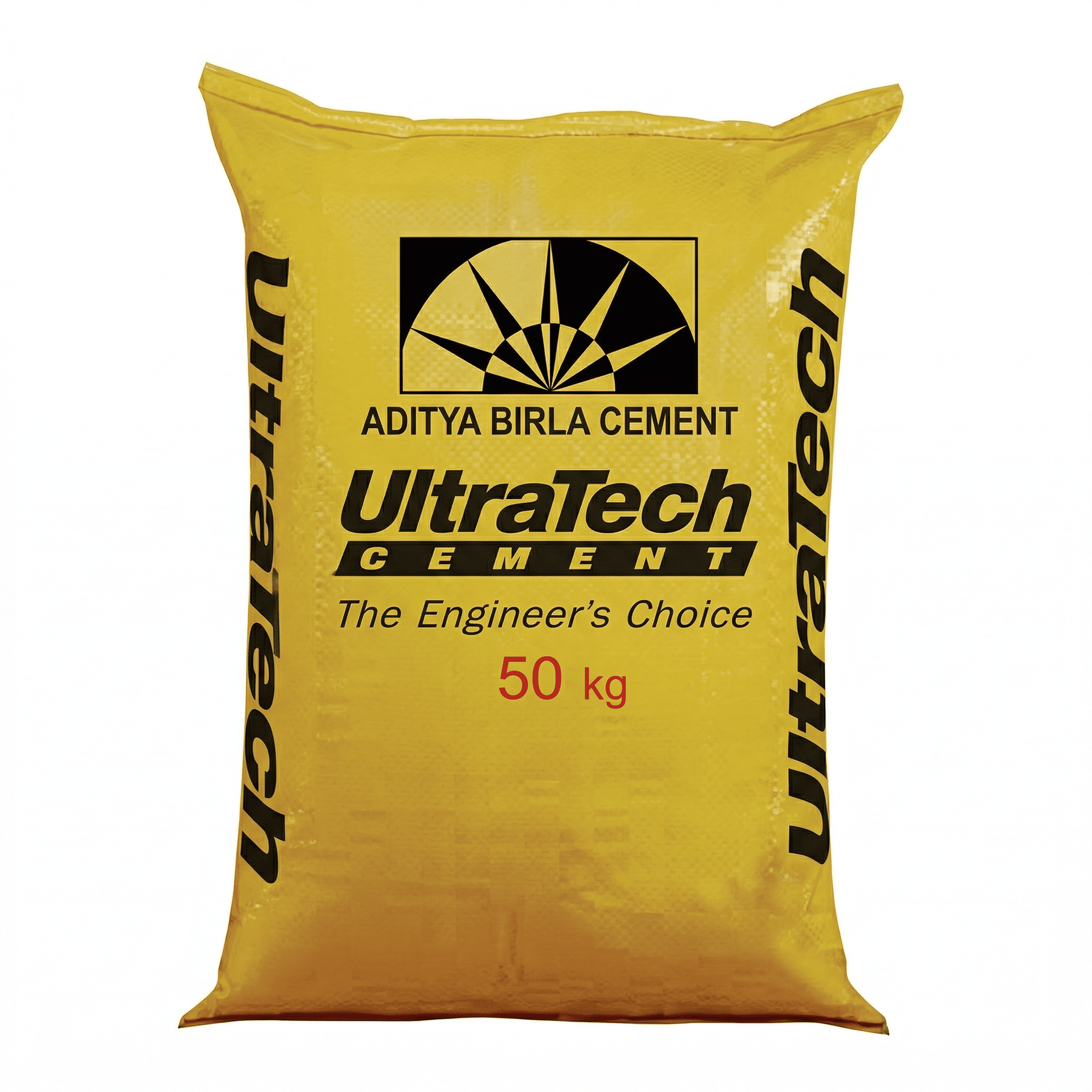
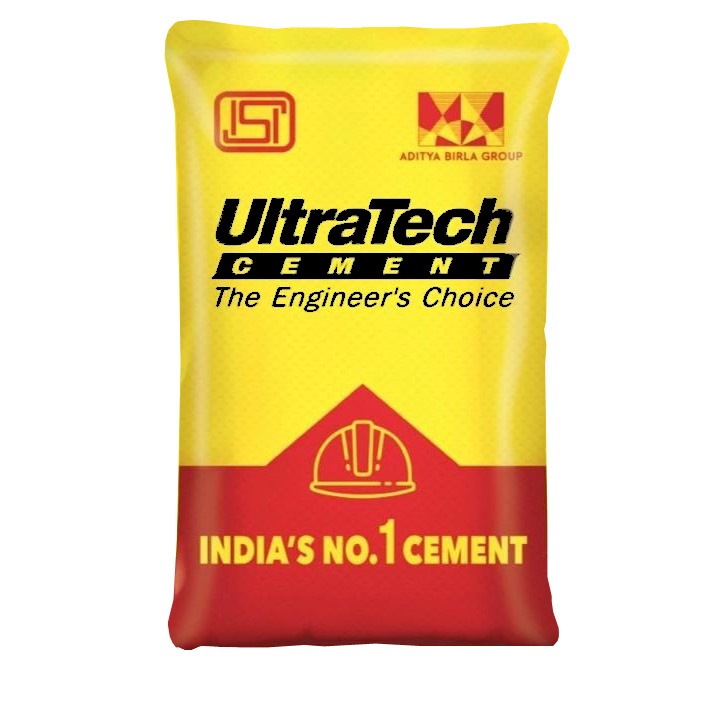 UltraTech PPCStandard bag: 50 Kg
UltraTech PPC Cement
General purposePortland Pozzolana Cement is a blended cement choice for common home-building work. It is typically considered for masonry, plastering and general RCC applications where the project specification calls for PPC and good long-term durability.
Applications
- Brickwork and masonry
- Plastering and finishing
- RCC slabs, beams and columns
Why consider it
- Broad home-building utility
- Blended cement durability profile
- Confirm structural use with your engineer
 UltraTech OPCConfirm grade and pack at order
UltraTech OPC Cement
Ordinary PortlandOrdinary Portland Cement is selected when a project specification calls for an OPC grade and a familiar strength-development profile. It is commonly used in structural concrete, precast work and other applications requiring controlled performance.
Applications
- RCC and structural concrete
- Precast elements
- Projects requiring OPC by design
Ordering note
- Tell us the specified grade
- Use the engineer’s mix design
- Do not substitute grades casually
 UltraTech Premium
Premium blended cement
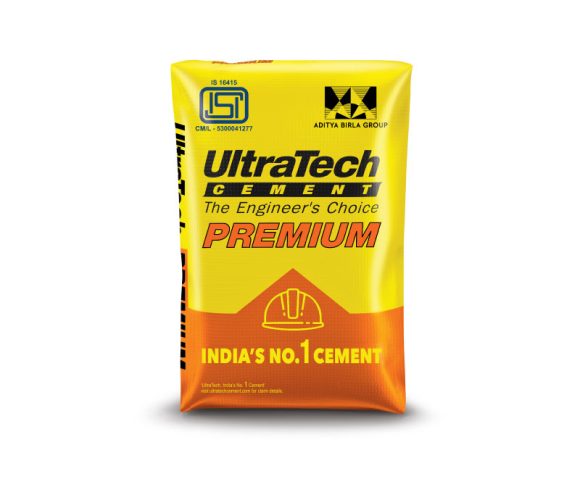
UltraTech Premium
Premium blended cementUltraTech Premium Cement
Dense & durableUltraTech describes Premium as an engineered blended cement that helps create denser, less permeable concrete. Its published benefits include crack resistance, corrosion resistance and higher durability, with applications spanning PCC, masonry, plastering and critical RCC work.
Applications
- RCC slabs, beams and columns
- Subterranean and marine-adjacent work
- Masonry and plastering
Key benefits
- Helps limit permeability
- Designed for durability
- Supports protection against corrosion
 UltraTech Weather Plus
Weather-focused solution
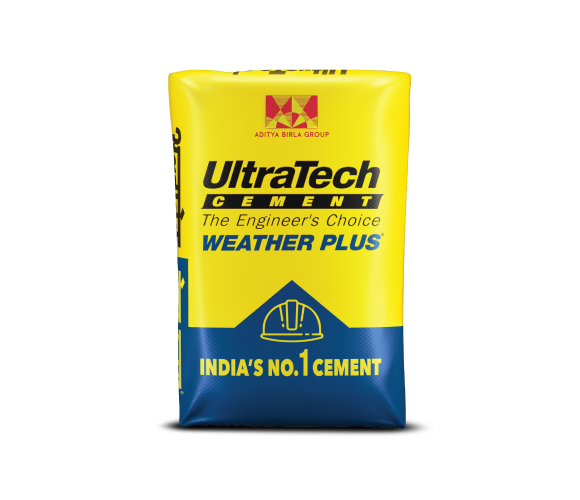
UltraTech Weather Plus
Weather-focused solutionUltraTech Weather Plus
Built for exposureUltraTech Weather Plus is designed for construction where changing weather and moisture exposure are central concerns. It is a practical choice to discuss for exterior-facing concrete and masonry work, alongside correct detailing, waterproofing and curing.
Discuss for
- External walls and masonry
- Moisture-exposed areas
- Weather-facing home surfaces
Build better
- Pair with proper waterproofing
- Protect and cure the work correctly
- Follow the site engineer’s guidance
 UltraTech Super
Blended cement
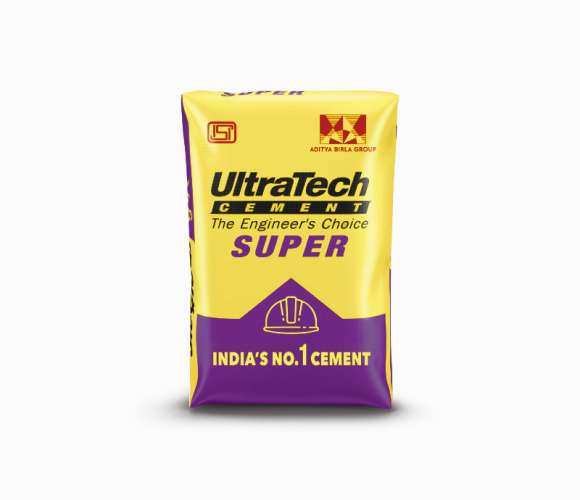
UltraTech Super
Blended cementUltraTech Super Cement
Early strength focusUltraTech’s official product information describes Super as a new-generation blended cement, a type of PPC, designed for strong and durable construction. Its stated advantages include higher early strength, smoother finishing, faster construction and lower carbon impact than OPC 53.
Applications
- Fast-track home construction
- Brickwork and plastering
- RCC work where specified
Key benefits
- Higher early strength positioning
- Quick formwork or shuttering cycles
- Blended cement sustainability profile
Portfolio comparison
| Product | Cement type | Primary positioning | Typical discussion areas |
|---|---|---|---|
| UltraTech PPC | Portland Pozzolana | Versatile blended cement | Masonry, plastering, general RCC |
| UltraTech OPC | Ordinary Portland | Grade-specific structural work | RCC, precast, specified concrete |
| UltraTech Premium | Engineered blended | Crack, corrosion and durability protection | Critical RCC, marine or hostile exposure |
| Weather Plus | Weather-focused solution | Weather and moisture exposure | Exterior-facing construction |
| UltraTech Super | Blended PPC | Early strength and fast-track work | RCC, masonry, plastering |
This comparison is for product orientation. Confirm the required cement type and grade against your structural drawings and engineer’s specification.
UltraTech scale.
Local supply support.
UltraTech Cement is part of the Aditya Birla Group and serves home builders, infrastructure projects and industrial construction with a broad portfolio of cement and building solutions.
Through Pahari Home Solutions, project teams can coordinate product selection, bulk quantities and site delivery for the Medinipur and Jhargram regions.
Built for every stage
From masonry and plastering to critical RCC, match the product to the specification.
Supply with clarity
Confirm grade, pack, quantity, invoice and delivery terms before dispatch.
Supply desk
Project support checklist
- Product and grade confirmation
- Quantity and route planning
- GST invoice coordination
- Site delivery scheduling
Bulk order enquiry
Share your product, quantity and site location. We will coordinate pricing and delivery availability.
Quick bag estimator
A rough planning aid only. Final quantity depends on mix design, reinforcement, wastage and site practice.
Frequently asked
What is cement?
Cement is a binding material used with water, sand and aggregates to form mortar or concrete.
What are the different types of cement?
Common types include OPC, PPC, PSC, rapid-hardening, sulphate-resistant, low-heat and specialised cements.
What is PPC cement?
PPC means Portland Pozzolana Cement, a blend of clinker, gypsum and pozzolanic materials such as fly ash.
What is OPC cement?
OPC means Ordinary Portland Cement and is available in grades such as OPC 43 and OPC 53.
What is the difference between OPC and PPC cement?
OPC generally develops strength faster, while PPC is commonly preferred for durability and lower heat of hydration. Follow the engineer’s recommendation.
Which cement is best for house construction?
Selection depends on RCC, foundations, slabs, brickwork, plastering and finishing. Use the product recommended by a qualified engineer.
Can the same cement be used for all construction work?
Some general-purpose cements support multiple applications, but selection should follow the application and project specifications.
Can cement be used for RCC work?
Yes, suitable cement can be used for foundations, columns, beams, slabs and other reinforced concrete structures as specified.
What is the difference between OPC 43 Grade and OPC 53 Grade cement?
The grade indicates minimum 28-day compressive strength: OPC 43 corresponds to 43 MPa and OPC 53 to 53 MPa.
Does darker cement mean better quality or higher strength?
No. Colour varies with raw materials and manufacturing and does not determine strength or quality.
How much cement is required for house construction?
It depends on area, design, foundation, floors, concrete grade and mix proportions. Consult a structural engineer.
How many bags are required for a 1,000 sq. ft. house?
The exact quantity varies by design, floors, foundation and concrete grade; have a qualified professional prepare the estimate.
What is the best cement mix ratio?
The ratio depends on application, grade, aggregates and structural requirements. Use an approved mix design.
What is the water-cement ratio and why is it important?
It is the proportion of water to cement; controlling it affects concrete strength, workability and durability.
What is concrete?
Concrete is hardened cement, sand, aggregates and water mixed in suitable proportions; admixtures may also be used.
What are the different grades of concrete?
Common grades include M20, M30 and M40, but the correct grade depends on structural and exposure requirements.
What is the minimum concrete grade for a residential building?
For mild exposure, M20 is commonly specified as the minimum RCC grade, but the structural engineer must determine the project grade.
How long should concrete be cured?
Curing commonly lasts around 7 to 10 days, depending on cement, weather and project requirements, or as directed by the engineer.
Why is curing important in construction?
Proper curing supports intended strength and durability; inadequate curing can contribute to surface defects and non-structural cracking.
Can M-Sand be used with cement?
Yes, when manufactured sand meets required quality and grading standards for concrete, plastering or brickwork.
What type of water should be used for concrete and curing?
Use clean water free from harmful substances that may affect concrete or reinforcement.
How should cement be stored?
Store it in a dry area off the ground and away from walls, water and excessive humidity.
How can I check whether a cement bag is genuine?
Buy from an authorised dealer or trusted supplier and check sealed packaging, manufacturing, batch and standard details.
How can I choose the right cement for my project?
Match cement to foundations, RCC, slabs, brickwork, plastering or other work with guidance from your engineer or contractor.
Can I order cement in bulk from Pahari Home Solutions?
Yes. Contact the team to check brand availability, current pricing, minimum order requirements and delivery options.