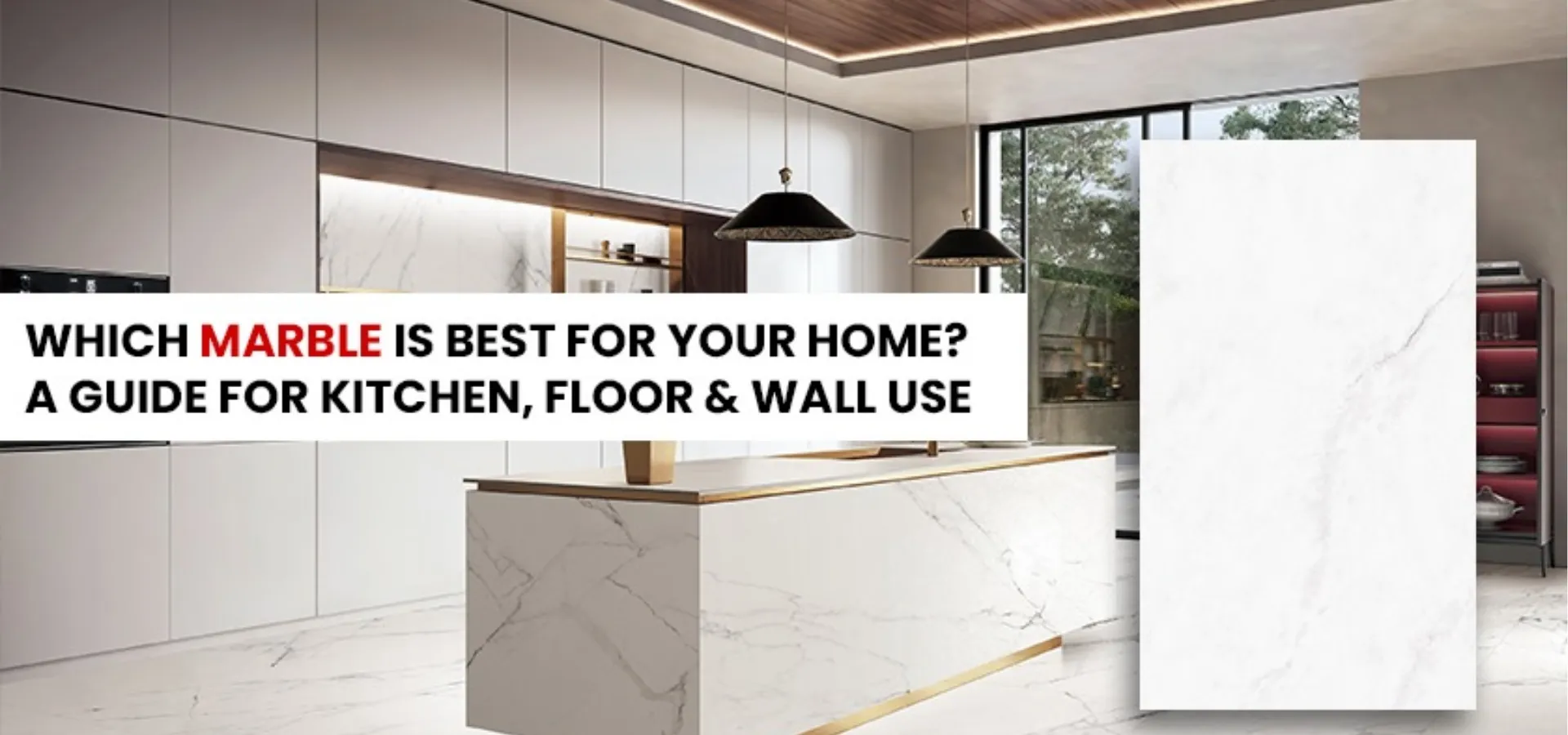
Choosing the perfect marble for your home can feel like navigating a maze. It is a significant financial investment, and because natural stone is permanent, the decision you make today will define your home’s character for decades.
In 2026, the Indian marble market is flooded with options—from budget-friendly local stones to ultra-premium imported slabs. As an authorized dealer, Pahari Home Solutions brings you this complete, data-backed guide to help you bypass the confusion, understand the real costs, and select the perfect marble for your space.
1. The Great Divide: Indian vs. Italian Marble
The first and most crucial decision you will make is choosing between domestic and imported stone. It is not just about price; it is about chemistry, durability, and usage.
- Indian Marble (The Durable Workhorse): Quarried primarily in Rajasthan, Gujarat, and Madhya Pradesh, Indian marble is dense, hard, and highly durable. It has medium luster and can withstand the heavy foot traffic of a bustling Indian household without requiring constant maintenance.
- Italian Marble (The Statement Piece): Imported from regions like Carrara and Verona, Italian marble is softer, more porous, and features highly dramatic veining. It achieves a stunning, mirror-like “wet” polish that Indian marble cannot match. However, its softness makes it prone to scratches and stains.
(Book-matching is a popular technique used with highly veined Italian marble, where two adjoining slabs are polished on opposite sides to create a mirror-image pattern.)
At a Glance: Indian vs. Italian
| Feature | Indian Marble | Italian Marble |
| Durability & Hardness | Very High (Scratch resistant) | Moderate (Prone to scratches/chipping) |
| Porosity | Low (Resists stains better) | High (Requires strict chemical sealing) |
| Aesthetics | Subtle veins, earthy colors | Bold, dramatic veins, high crystal clarity |
| Best Used For | Everyday flooring, countertops, outdoors | Living room floors, accent walls, luxury bathrooms |
| Backing | Usually unbacked | Often requires a nylon/fiberglass mesh backing for strength |
2. Room-by-Room Selection Guide
You shouldn’t use the same marble throughout your entire house. Different rooms have different functional requirements.
The Living Room
- The Goal: Luxury, spaciousness, and visual impact.
- The Recommendation: Light-colored Italian marbles like Statuario, Carrara, or Dyna. White and light beige stones reflect light, making your living room look expansive and grand.
The Kitchen Countertops
- The Goal: Stain resistance, heat resistance, and heavy durability.
- The Recommendation: Indian Green Marble, Black Marquina, or Granite (if you are open to non-marble stones).
- Warning: Avoid Italian marble on kitchen countertops. The acids from lemon, vinegar, and tamarind will cause “etching” (permanent dull spots) on soft Italian stones like Calacatta.
The Bathroom
- The Goal: Safety (anti-slip) and moisture resistance.
- The Recommendation: Honed (matte) finish Indian marble.
- Warning: Never use highly polished marble on bathroom floors; it becomes dangerously slippery when wet.
3. Understanding Marble Finishes
The way a stone is finished completely changes its appearance and utility.
- Polished: The classic, high-gloss, mirror-like finish. It highlights the stone’s color and veining perfectly but offers zero grip when wet.
- Honed: A smooth, matte, unpolished finish. It mutes the color slightly but provides excellent slip resistance and hides scratches very well.
- Leathered/Brushed: A textured finish created by brushing the stone with diamond-tipped brushes. It has a rustic, tactile feel and is excellent for outdoor spaces or dramatic feature walls.
4. Real-Time Marble Pricing in India (2026 Data)
When budgeting for marble, remember that the “slab price” is only half the story. You must account for loading, transportation, cutting, laying, and polishing.
Material Cost (Per Square Foot)
| Marble Type | Origin | 2026 Price Range (₹/sq.ft) | Visual Profile |
| Ambaji White | India | ₹55 – ₹110 | Pure white with light grey lines. |
| Makrana White | India | ₹200 – ₹300 | Classic, durable white (Taj Mahal stone). |
| Dungri / Katni | India | ₹60 – ₹150 | Budget-friendly beige/grey patterns. |
| Dyna / Breccia | Italy | ₹220 – ₹450 | Warm, earthy beige with crystalline textures. |
| Carrara | Italy | ₹300 – ₹800 | Milky white with fine, linear grey veins. |
| Statuario | Italy | ₹600 – ₹4,000+ | The ultimate luxury; bright white with bold, thick grey veins. |
The “Hidden” Installation Costs (Per Square Foot)
To get the true cost of your flooring, add the following to your slab price:
- Labor & Installation: ₹80 – ₹150
- Mirror Polishing: ₹60 – ₹100
- Consumables (Adhesives, Epoxy, Sealer): ₹20 – ₹40
- (Total Add-on Cost: ~₹160 to ₹290 per sq. ft.)
5. Pro-Tips: How to Inspect Marble Before Buying
Don’t just look at the pattern; look at the stone’s structural integrity.
- The Water Drop Test: Pour a few drops of water on the unpolished back of the slab. If the water absorbs instantly, the stone is highly porous and will require expensive, frequent sealing.
- Check the Thickness: Standard flooring marble must be between 16mm and 18mm thick. Anything thinner will crack under furniture weight.
- Look for Artificial Colors: Some sellers artificially dye cheap marble to look like premium Makrana or Green marble. Scratch the unpolished side slightly; if the color underneath is different, it’s dyed.
[Image demonstrating the water drop test on porous versus sealed marble]
15 Frequently Asked Questions (FAQs)
1. Which marble is best for daily-use flooring?
Indian marbles like Makrana, Ambaji, or Katni are best for daily use due to their high density and scratch resistance.
2. Is Italian marble too fragile for Indian homes?
It is not too fragile for floors, but it requires care. It is softer, so dragging heavy metal furniture across it will scratch it. It also requires a chemical sealant every 2-3 years.
3. Why do some Italian marbles have a fiberglass net on the back?
Because Italian marble is naturally soft and has many natural fissures (micro-cracks), the resin-coated fiberglass mesh holds the slab together during transport and cutting.
4. What is the difference between Marble and Granite?
Marble is a metamorphic rock rich in calcium, making it softer and porous. Granite is an igneous rock, making it incredibly hard, heat-resistant, and non-porous (ideal for kitchens).
5. How much marble should I buy for a 1,000 sq. ft. floor?
Always buy 10% to 15% extra to account for cutting wastage and skirting boards. For 1,000 sq. ft., purchase 1,150 sq. ft. of slabs.
6. Can I use acid to clean my marble floors?
Never. Toilet cleaners, vinegar, and acidic floor cleaners will permanently burn (etch) the calcium in the marble, leaving dull, white, rough spots. Use a pH-neutral stone cleaner.
7. Does white marble turn yellow over time?
Poor quality white marble with high iron content can oxidize and turn yellow if exposed to continuous moisture. High-quality sealed marble will not yellow easily.
8. What is “Book-Matching”?
It is a layout technique where two adjoining slabs are placed to mirror each other, creating an open-book or butterfly pattern. It is highly sought after with veined Italian marble.
9. Can I use marble for outdoor patios or parking?
Avoid polished marble outdoors as it is slippery. For outdoors, use Leathered or Flamed finish Granite or specialized heavy-duty textured tiles.
10. How often does marble need repolishing?
Indian marble usually needs repolishing every 7–10 years depending on foot traffic. Italian marble may require it every 4–6 years to maintain its high-gloss mirror finish.
11. Are the cracks in Italian marble normal?
Yes, natural fissures are part of the stone’s character. During installation, these are filled with color-matched epoxy resin before the final polish.
12. What is “Onyx” marble?
Onyx is a highly translucent, exotic natural stone often used for feature walls or bar counters because it can be backlit. It is very expensive (₹1,000 – ₹3,000/sq.ft) and highly fragile.
13. How long does the installation process take?
Laying and polishing marble is a slow, wet, and dusty process. For a standard 3BHK home, expect the entire process (curing and 7-step polishing) to take 3 to 4 weeks.
14. Does the thickness of the marble affect the price?
Yes. An 18mm slab will cost significantly more than a 15mm slab. Ensure your dealer is transparent about the exact millimeter thickness before billing.
15. How do I ensure I am getting what I paid for?
Always buy from authorized, reputed dealers. View the actual slab you are buying, not just a 1×1 foot sample piece, as natural veining varies wildly from block to block.
The Pahari Home Solutions Advantage
Choosing the right marble is an art and a science. At Pahari Home Solutions, we take the guesswork out of the equation. As an authorized premium dealer, we ensure every slab is rigorously quality-checked for uniform thickness, natural coloring, and structural integrity. Whether you want the timeless durability of Makrana or the breathtaking luxury of Italian Statuario, our experts are here to guide your investment.